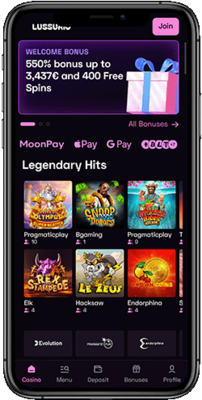
Responsible gambling tools are most useful when they are treated as practical boundaries rather than emergency features. For Canadian adults comparing online casinos, the important question is not simply whether a site offers limits, but whether those controls are clear, usable and suited to personal spending habits. Information about the lussurio casino promo code should therefore be considered separately from decisions about time, money and account access. A promotion can change the cost of play, but it should never determine a gambling budget or encourage chasing losses.
Which controls matter before the first deposit?
The strongest starting point is a deposit limit. It allows a player to decide in advance how much can be added during a selected period, such as a day, week or month. This is more reliable than relying on willpower after an unsuccessful session. A sensible limit should be based on discretionary money left after rent, food, transport, debt payments and other essentials. It should also account for deposits made elsewhere, rather than treating one account as the entire gambling budget.
Loss limits serve a different purpose. A deposit limit controls money entering an account, while a loss limit focuses on the amount that can be lost during a defined period. Both can be helpful because a player may deposit a fixed amount, win temporarily and then continue playing until the balance disappears. Wagering limits can add another boundary by restricting the amount staked. These settings are not interchangeable, so a comparison should identify which controls are available and how each one is calculated.
Time or session limits and reality checks address a different risk: losing track of duration. A session reminder can prompt a pause, while a time limit can stop play after a chosen period. Before using any control, read whether the setting applies immediately, requires support approval or takes effect after a delay. Also check whether it covers every game and activity on the account. A control that applies only to one category may provide less protection than its label suggests.
How should a player build a workable gambling boundary?
Begin with a written figure, not an informal intention. Decide the maximum amount and time that can be spent over a month, then divide that figure into smaller periods if needed. A monthly budget may be easier to manage financially, while weekly limits can make overspending visible sooner. Keep gambling funds separate from money reserved for household expenses. If the budget is gone, the planned response should be to stop rather than replenish it.
Next, choose controls that match the way play usually becomes difficult. Someone who tends to make repeated deposits may benefit most from a strict deposit limit or a cooling-off period. Someone who plays for longer than intended may need short session limits and frequent reality checks. A person affected by losses may need a loss limit, self-exclusion or support from a qualified service rather than another promotional restriction.
Record the settings and review them only at a calm time. Do not increase a limit immediately after a loss, during a winning streak or while responding to a time-sensitive offer. It is also useful to keep a simple record of deposits, withdrawals, time spent and emotional reactions. This can reveal patterns that a balance screen hides. If the account offers several controls, activate them before exploring games or promotions, when there is less pressure to continue.
What limitations should appear in a comparison?
A responsible gambling comparison should distinguish between a tool being listed and a tool being fully explained. It is not enough to see references to deposit limits, wagering limits, loss limits, reality checks, cooling-off periods and self-exclusion. Readers should look for information about how to set each control, its duration, whether it applies across the account and whether changes take effect instantly.
Temporary restrictions and permanent exclusion are also different. A cooling-off period is designed to create a pause, whereas self-exclusion is a stronger request to restrict access for a chosen period or indefinitely. The practical details matter: ask whether access is blocked across devices, whether marketing messages stop and what happens to unresolved account matters. Do not assume that deleting an app or logging out creates the same barrier as formal self-exclusion.
Another limitation is that account tools cannot remove every gambling risk. They may not cover other operators, land-based venues, informal betting or spending through a second account. They also cannot guarantee that a person will not feel pressure to chase losses. For broader guidance, the CAMH information on problem gambling explains warning signs and where concerns may fit into a wider health context. Casino controls should supplement, not replace, independent support.
When is a pause more useful than a lower limit?
A lower limit is appropriate when gambling remains occasional, affordable and within control, but the current boundary is too generous. A pause is more suitable when play is becoming automatic, emotionally charged or difficult to stop. Warning signs can include depositing soon after a loss, hiding activity from family, borrowing money, neglecting responsibilities or feeling restless when not gambling.

Cooling-off periods can interrupt a pattern before it becomes more serious. During that time, remove saved payment details, unsubscribe from promotional messages and avoid replacing one gambling account with another. If a website provides a self-exclusion process, follow its stated instructions carefully and save confirmation of the request. Do not interpret a failed login, a pending identity review or a technical problem as a voluntary break.
Support is especially important when a person has repeatedly broken their own limits. A trusted friend or family member can help with accountability, while a healthcare professional or gambling-support service can offer more structured assistance. The goal is not to find a more attractive promotion or a different game. It is to create distance from gambling and address the reasons that make stopping difficult.
How can Canadian players compare tools without overvaluing promotions?
Start with a short checklist and give responsible gambling controls more weight than a headline bonus. Confirm whether the account offers deposit, loss, wagering and time limits, then note the available cooling-off and self-exclusion options. Check whether support can explain the settings in plain language. If key conditions are difficult to locate, that lack of clarity is itself relevant when comparing operators.
Promotions deserve a separate review because they can affect behaviour. A bonus may include wagering requirements, qualifying deposits, expiry periods, excluded games or restrictions on withdrawing bonus funds. The source material for an offer should be read before accepting it, and the player should decide whether the promotion fits the existing budget. A reward is not a reason to raise a limit, make an extra deposit or continue after the planned session ends.
Finally, compare the quality of the decision process rather than searching for a perfect platform. Ask whether the terms explain how limits work, whether support is reachable and whether account restrictions are described without ambiguity. Keep records of questions and responses. If the answers are incomplete, do not fill the gaps with assumptions about eligibility, protection or timing. A cautious comparison recognises that offshore status, local rules and individual circumstances may affect what is available.
Questions about safer gambling tools
Can a deposit limit prevent all gambling losses?
No. A deposit limit restricts money added to one account, but it does not necessarily cover other operators, cash gambling or funds already in the account. It is a useful boundary, not a guarantee. Combine it with a complete personal budget, time controls and a pause if gambling is becoming difficult to manage.
Should I use self-exclusion after breaking my budget?
Self-exclusion may be appropriate when you cannot reliably follow your own limits, repeatedly chase losses or feel unable to stop. It is a stronger measure than reducing a deposit limit. Follow the operator’s formal process and seek independent support, especially if gambling has affected debt, relationships, work or mental health.
Do bonuses make responsible gambling tools less effective?
They can create extra pressure if wagering conditions encourage longer play or additional deposits. Read the complete offer terms and decide on a budget before accepting anything. Never increase a limit to qualify for a reward. If the promotion makes it harder to stop, declining it may be the safer choice.